








Most people pick a knife the way they pick a watch. They look at how it sits in the hand, how it looks clipped to a pocket, maybe how it photographs next to the rest of their gear. Then they carry it every day and slowly realize it was built for a different job than the one they actually need it to do.
Finding the best blade length for EDC isn’t about carrying the biggest blade you can get away with or the smallest one that disappears in your pocket. It’s about matching blade length to how you actually use a knife, where you carry it, and what you need it ready for on an average Tuesday, not your best day at the range.
Why Blade Length Is the Most Misunderstood EDC Decision
Most buyers shop by look and brand first. They notice how a blade profile reads in a product photo, whether the handle color matches the rest of their gear, whether the name sounds tactical enough. What gets ignored is carry comfort, task efficiency, and legal limits, the three things that actually determine whether a knife earns a permanent spot in your pocket or ends up in a drawer after two weeks.
Blade length determines how often you actually carry and use a knife, not just how well it cuts on day one. A knife that prints through your pocket, snags on your belt, or crosses a legal line in your city gets left at home. A knife left at home isn’t doing its job.
The Three Trade-Offs That Define Your Blade Length
Every blade length decision comes down to three tensions, and understanding them is more useful than chasing a single “ideal” number.
Control versus cutting power is the first. A shorter blade gives you more precision for fine tasks like opening mail or trimming a loose thread, while a longer blade gives you more leverage for tougher jobs like breaking down boxes or cutting thicker cordage.
Portability versus capability is the second. A compact blade rides easier in a pocket day after day, while a larger blade takes on tougher material but asks more of your carry setup in return.
Discreet carry versus visibility is the third. A smaller blade draws less attention in an office, a classroom, or a crowded train car. A larger blade can be a completely reasonable choice on the job, but it can start to feel impractical the moment you step into an elevator.
None of these trade-offs has a universally correct answer. They only have a correct answer for your specific week.
Where Blade Length Actually Matters in Daily Use
Light everyday tasks, like opening packages or cutting tape and cord, rarely need more than a compact blade. Anything beyond that is extra length you’re carrying but not using.
General utility use covers most people’s actual week: a mix of daily tasks with the occasional tougher material. This is where most people’s actual carry needs live, a size that can flex between the two without becoming a liability to carry.
Heavy-duty or high-demand use, involving thick materials or unpredictable job-site conditions, is where a longer blade starts to justify its size. If your week doesn’t regularly include that kind of work, that length spends more time waiting in your pocket than working in your hand.
The Legal Line Most EDC Carriers Overlook
Blade length isn’t just a comfort question; it’s a legal one, and it’s the part most people skip until it’s too late. Under federal law, a pocket knife only avoids classification as a dangerous weapon inside federal facilities if its blade measures under two and a half inches.
That threshold is one of the only hard national numbers in an otherwise fragmented patchwork of state and local knife laws, most of which set their own limits somewhere between three and four inches for concealed carry.
That gap between what’s comfortable to carry and what’s legal to carry is exactly why blade length deserves more attention than it gets. A knife that’s perfectly legal in your home state can become a problem the moment you step into a federal building, a different city, or a different state entirely. Knowing where your blade falls relative to these thresholds is part of choosing the right length, not an afterthought.
How Blade Length Affects Comfort, Not Just Capability
The best knife is the one you actually carry, not the one you leave in a drawer because it prints through your pocket or throws off your balance. Blade length has a direct relationship with closed length, and closed length is what determines how a knife rides in your pocket for ten hours at a time.
A blade that’s too long for your carry style creates pocket weight and visible printing that draws attention you didn’t ask for. It can also interfere with movement, catching on seatbelts, car doors, or gear you’re reaching for in a hurry. Comfort isn’t a soft consideration here. It’s the difference between a knife you carry every day and one you carry for a week before it ends up in a drawer.
The Sweet Spot Blade Length for Most EDC Users
For the vast majority of everyday carry situations, a mid-size blade in the three- to three-and-a-half-inch range delivers the best balance of control, capability, and legal headroom. It’s long enough to handle real tasks without feeling undersized, and short enough to stay comfortable and discreet through a full day of carry.
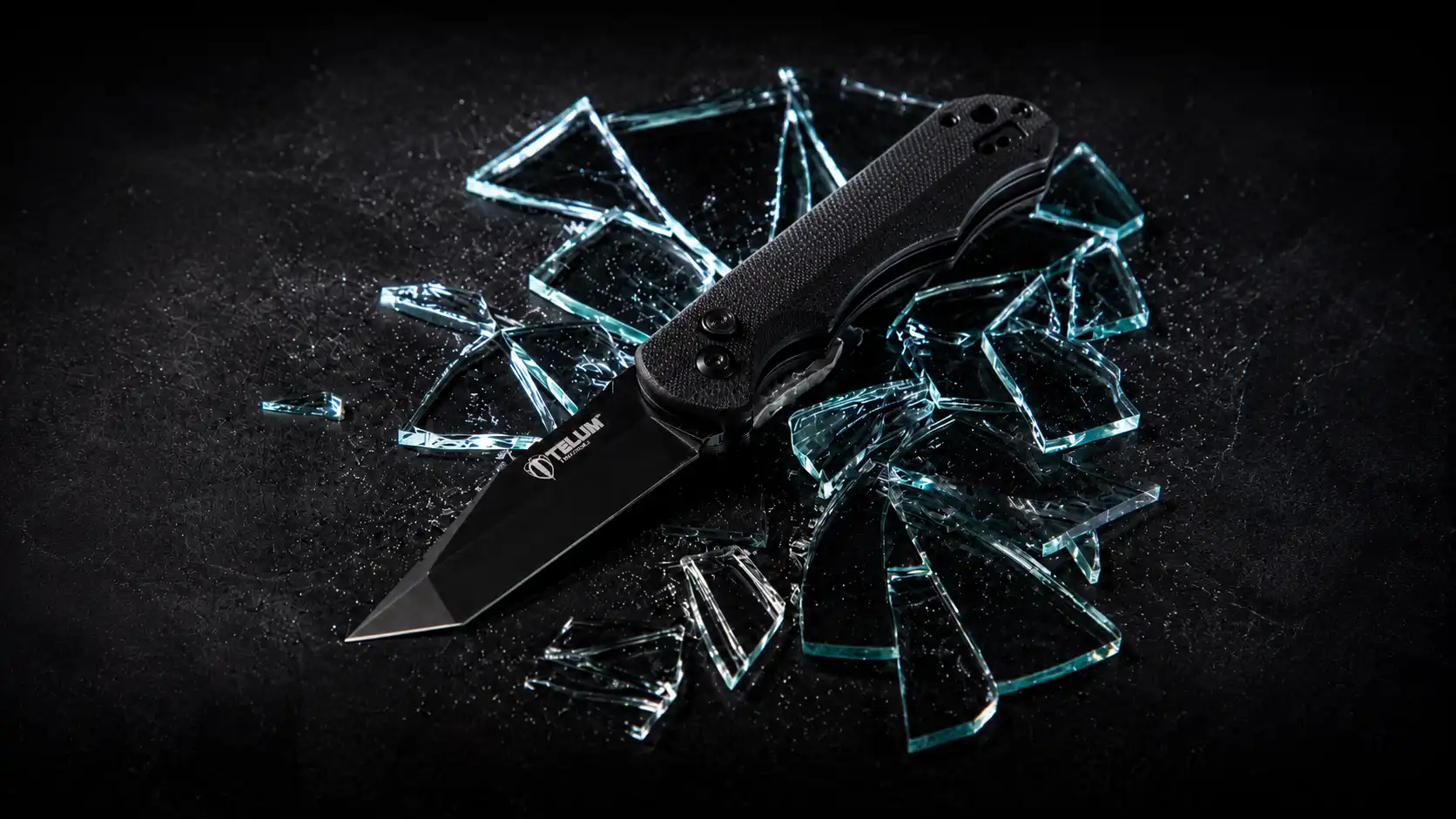
Our Aftershock and Scorch both sit at 3.5 inches for exactly this reason. Both are built on D2 steel with a compact 4.5-inch closed length, giving you enough blade to handle daily tasks without pushing into territory that complicates your carry or your legal footing. Extremes in either direction limit versatility. Go too short, and you sacrifice capability for tougher jobs. Go too long, and you sacrifice comfort, discretion, and legal simplicity for capability you’ll rarely use.
Common Mistakes When Choosing Blade Length
The most common mistake is choosing based on appearance rather than actual use, picking a blade that looks tactical rather than one that fits your week. Close behind it is ignoring daily use scenarios entirely and buying for a hypothetical worst case instead of an average
Tuesday. Overestimating needed size is its own trap, since most tasks require far less blade than people assume. And skipping carry comfort altogether means finding out too late that the knife you bought isn’t the knife you’ll actually carry.
How to Choose the Right Blade Length for Your Lifestyle
Start by tracking what you actually reach for a knife to do over a normal week, not what you imagine you might need on the one day everything goes wrong. Most people overestimate their real requirements by a wide margin.
Next, consider where your week takes you. If your days move between settings, home, a workplace, transit, a job site, size for the most restrictive environment you pass through, not the most relaxed one.
When you’re unsure, lean toward the smaller end of your range. It’s easier to notice a blade is slightly undersized for an occasional task than to carry one you quietly stop carrying because it’s uncomfortable.
Finally, think past this week. A blade you’re still glad to carry a year from now matters more than one that’s perfect for a single scenario you might encounter once.
Built in Minden, Louisiana, By People Who Carry Every Day
At Telum Tactical, we build automatic and folding knives assembled in Minden, Louisiana, and we back every one with a lifetime warranty. As a veteran-owned member of the Rock Ridge Outdoors family, we design for people who carry a blade for a living or every day because they take preparedness seriously.
That perspective shapes every decision we make about blade geometry, steel, and size, because we know the difference between a knife that looks capable and one that performs when it matters.
Ready to Find Your Ideal EDC Blade Length?
Once you know where you fall on control, capability, and legal headroom, choosing a blade becomes much simpler. Shop automatic knives built for how you actually carry, not just how a knife looks in a photo.