









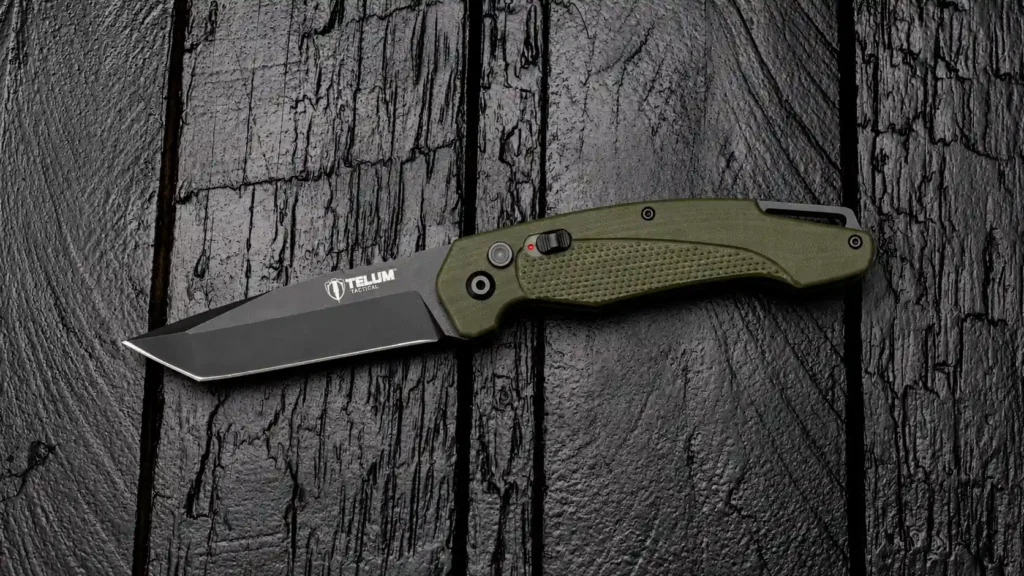
You’ve carried the same knife for years. It rides in your pocket every day, at work, running errands, nothing dramatic about it. Then a road trip comes up, or a flight, or a new job relocates you across state lines, and suddenly a question you never had to ask becomes urgent: is this even legal where you’re going?
Automatic knife travel laws are more scattered than most owners realize, and more forgiving than most owners fear. In a 2024 ruling that struck down Massachusetts’ 67-year-old switchblade ban, the state’s highest court noted that only seven states plus Washington, D.C. still categorically ban automatic knives outright, with just two states restricting blade length to under two inches.
The legal landscape has shifted hard toward legality over the last decade, state after state repealing bans that had sat on the books since the 1950s. But that small handful of exceptions is exactly where an otherwise careful owner gets caught off guard, and knowing which side of that line you’re on before you travel takes far less effort than finding out the hard way.
Why Automatic Knife Laws Vary So Much by State
Knife law in the United States was never built as one coherent system, and it shows. Most state-level automatic knife restrictions trace back to a wave of legislation in the 1950s, passed during a period of public anxiety about switchblades that had far more to do with movies and headlines than with how the knives were actually used. Federal law added another layer on top around the same era, restricting interstate commercial sale and shipment of automatic knives without banning ownership itself, which is a distinction that still confuses people today.
The result is a patchwork that has almost nothing to do with how dangerous a knife actually is and almost everything to do with when a particular state legislature last touched the issue. A state that repealed its ban a decade ago sits right next to a state that has left the same decades-old restriction completely untouched. Even among states that never imposed an outright ban, the details vary sharply: some cap the legal blade length at a fraction of what plenty of daily carriers are used to, while a neighboring state imposes no length restriction at all once possession is legal.
Neither reflects current safety research or how knives are actually used day to day; it simply reflects legislative timing. That inconsistency is normal, not a sign that something is unusually strict about wherever you happen to be headed, which is exactly why a consolidated resource is worth more here than trying to piece the picture together from memory or a single search.
What Actually Changes the Moment You Cross a State Line
A knife that’s completely legal to own, carry, and use every day in your home state does not travel with those same protections automatically. Legality is tied to the state you’re physically standing in at that moment, not the state where you bought the knife, registered your address, or normally carry it day to day.
This catches people off guard specifically because nothing about the knife changes. It’s the same blade, riding in the same pocket, as part of the same routine; only the jurisdiction underneath you is different. That’s especially relevant for law enforcement and security professionals who travel for work and reasonably expect to carry the same duty knife across jurisdictions without a second thought, only to discover their destination handles automatic knives differently than home.
A knife that’s completely unremarkable at home can become a real legal problem the moment a traffic stop, a bag check, or a routine encounter happens in one of the few states with an outright ban. Checking ahead of time takes minutes. Learning the hard way, in the middle of an unrelated situation, does not.
Airports and TSA: A Different Set of Rules Entirely
Air travel adds a separate layer that has nothing to do with state law. Automatic knives, like virtually all knives, are prohibited in carry-on bags under federal transportation security rules, regardless of which state you’re flying from or into and regardless of whether your knife is completely legal to own and carry once you land.
Checked baggage is a different story, and this is where most travelers make an avoidable mistake. A knife that would be confiscated on the spot from a carry-on can typically be packed in checked luggage instead, provided it’s sheathed or securely wrapped so it doesn’t pose a risk to the person who has to handle the bag on the other end physically.
This rule has nothing to do with whether the knife is legal where you’re going; it’s purely an airport security and baggage-handling procedure, which means it applies the same way whether your destination bans automatic knives entirely or has no restrictions at all. Packing it correctly the first time protects a knife built to be carried for years, not just to get through a single trip, and avoids a completely preventable problem that has nothing to do with breaking any actual law.
How to Check Before You Travel
A few minutes of research before a trip solves nearly every version of this problem, and it’s worth doing every time, not just for unfamiliar states.
Check the destination state’s specific law, not just a general summary, since blade length restrictions and carry conditions vary even among states that broadly allow automatic knives. Check any state you’re passing through as well, not only your final stop, since a layover state or a highway route through a restrictive state still counts even if you never intend to carry there.
If flying, keep the checked-baggage rule from above in mind regardless of your destination’s law, since it’s a packing procedure, not a legal one. When a trip involves multiple states or somewhere unfamiliar, Telum Tactical’s automatic knife restrictions overview is a faster starting point than searching state by state from scratch, and our broader look at state automatic knife rules and regulations covers the underlying legal landscape and how it got this way in more depth.
Built in Minden, Louisiana, With a Warranty That Travels With You
Telum Tactical knives are assembled in Minden, Louisiana, by a veteran-owned team that builds knives meant for actual daily use, not display cases. Every knife is constructed from high-strength S35VN or D2 steel alloys and backed by a lifetime warranty, the same coverage whether the knife has stayed in one state its whole life or traveled through a dozen different ones with its owner.
That matters here specifically because a knife built for serious daily carry, whether for personal EDC, law enforcement duty, or military use, should be able to go where its owner goes without becoming a liability. Knowing the legal landscape before a trip is what makes that possible without incident, and it’s a small amount of preparation that matches the same standard of taking carry seriously that goes into choosing the knife in the first place.
Frequently Asked Questions
Does a state’s automatic knife ban apply to a knife I already owned before moving there?
Yes. Weapon possession law is almost always based on where you are and what you currently possess, not when or where you originally bought the knife. Moving to a stricter state does not grandfather in a knife purchased in a more permissive state. A lifetime warranty covers manufacturing quality, not legal compliance; it protects the knife itself, but it doesn’t change what the law in your new state allows.
Is shipping an automatic knife across state lines different from carrying one while traveling?
Yes, these fall under separate rules entirely. Federal law restricts the interstate commercial sale and shipment of automatic knives, which is a different question from a state’s rules about personal possession and carry. Carrying a knife you already own is a state-law question. Mailing or shipping one, including ordering directly from a retailer like Telum Tactical, is a federal-law question with its own separate restrictions.
How strict are blade-length limits in states that don’t ban automatic knives outright?
They vary more than most people expect. California’s cap is two inches and Connecticut’s is one and a half, both far shorter than many daily-carry blades, while other states impose no length restriction at all once possession is legal. For exact figures state by state, our restrictions overview above covers that level of detail.
Ready for Your Next Trip?
A knife built to handle daily carry should handle travel days too, not sit in a drawer because packing it felt complicated. Explore the full lineup and carry the same confidence at your destination that you already count on at home.